Health & Safety Policy for Flat Clearance New Cross
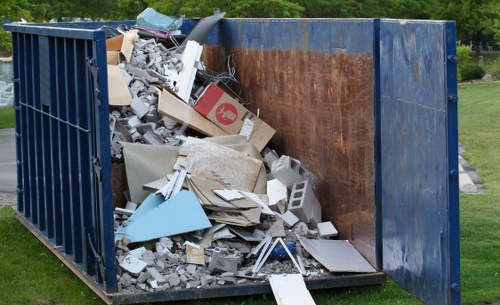 This Health and Safety Policy sets out the approach adopted by our flat clearance operation to manage risks associated with waste and rubbish removal in our rubbish company service area. The purpose of this policy is to provide a clear framework for safe work practices, compliance with applicable health and safety obligations, and the consistent protection of employees, contractors and members of the public. The policy applies to all site activities related to flat clearance, house clearance and associated waste handling.
The scope covers pre-clearance assessment, on-site removal, loading, transport handing and disposal arrangements. It also addresses manual handling, use of mechanical aids, chemical and sharps hazards, and traffic management for vehicles delivering or collecting waste. All staff and contracted operatives engaged in flat clearance must read and follow the policy, participate in training and report hazards promptly.
 Risk assessment is central to our safety management. Before any clearance job we carry out a documented site assessment to identify hazards such as unstable items, asbestos-containing materials, electrical risks, biohazards and sharps. Control measures are recorded and implemented including task sequencing, exclusion zones and use of appropriate personal protective equipment (PPE). The assessment informs the job plan and any necessary specialist disposal arrangements.
Responsibilities and Workforce Competence
Line managers are responsible for ensuring safe systems of work are developed and followed. Operatives must follow safe methods, wear designated PPE and attend site inductions. The designated safety officer will maintain training records, review risk assessments and ensure competence for specific tasks such as bulky waste handling or hazardous material identification. All staff are encouraged to raise concerns and suggest improvements.
We maintain an induction and ongoing training programme that covers manual handling techniques, safe use of trolleys and lifting aids, traffic marshal procedures and infection control where appropriate. Training is recorded and refreshed at intervals determined by risk and regulatory expectations. Supervisors carry out toolbox talks before complex or higher-risk clearances.
 Personal protective equipment is mandatory where indicated by the risk assessment. Typical PPE includes high-visibility clothing, safety footwear, gloves suitable for cut and puncture resistance, eye protection and respiratory protection when dust or fibres are present. PPE selection is matched to the hazard and maintained in serviceable condition.
Safe Work Procedures and Equipment
Safe systems of work are documented and reviewed. These include procedures for bulky item removal, stairway clearances, use of flatbed vehicles and secure loading practices. Equipment checks are performed before each shift: hand tools, trolleys, hoists and vehicle restraints. Faulty equipment is taken out of service and reported for repair.
The policy emphasises effective housekeeping to reduce trip and slip hazards. Workspaces must be kept clear, spillages cleaned promptly and waste segregated for recycling, reuse or lawful disposal. Where mechanical lifting is needed for heavy items, only trained personnel operate lifting gear under supervision with exclusion zones in place.
Contractors and sub-contractors engaged to support clearances must provide evidence of their own health and safety arrangements and insurance. They are subject to our site rules and must cooperate with our site risk assessments and permit-to-work procedures where required.
Hazardous Waste, Sharps and Environmental Controls
Items identified as hazardous, including chemicals, asbestos suspect materials, electronic waste and sharps, are handled according to legal requirements and specialist disposal routes. We do not accept responsibility for illegal disposal by third parties and will ensure appropriate segregation and documentation at point of collection. Environmental controls minimise contamination and release to the public realm.
The company maintains clear instructions for dealing with potentially contaminated loads, including temporary secure storage, isolation of the affected area and notification to relevant authorities when required. These measures protect workers and the wider community and ensure the waste removal service area operates within regulatory expectations.
 Incident reporting and emergency response arrangements are established. All injuries, near misses and environmental incidents must be reported, recorded and investigated to identify root causes. Corrective actions are implemented and communicated to prevent recurrence. First aid provisions and emergency contacts are available at operational bases and on mobile units.
 Monitoring, compliance and review ensure continuous improvement. Regular audits, site inspections and performance reviews assess implementation of the policy. Metrics include incident frequency, training completion, equipment inspection records and audit findings. Where non-compliance is identified, prompt remedial action and follow-up checks are required.
Enforcement and disciplinary measures are applied when unsafe acts or omissions compromise safety. Positive reinforcement recognises safe behaviour and suggestions that enhance safety. The policy supports a culture where safety is integral to operational planning and customer-facing activities in the flat clearance and rubbish removal sector.
Policy review occurs at least annually or after a significant incident, change of process or introduction of new equipment. The review process evaluates legal developments, technological advances in waste handling and feedback from operational staff to keep the policy effective. This document constitutes the core health and safety framework for our flat clearance operations across the service area and should be read in conjunction with job-specific risk assessments and method statements.
The approach described here balances practical service delivery requirements with robust safety controls. By embedding clear responsibilities, training, equipment maintenance and incident management the organisation seeks to protect workers, clients and the public while delivering reliable flat clearance and rubbish removal services. Adherence to this policy is mandatory for anyone performing tasks within the scope of our waste removal and clearance activities.
Signed by senior management and reviewed periodically, this policy forms part of the management system that governs how we plan and execute clearances in a safe, legal and environmentally responsible manner across the rubbish company service area and related waste removal operations.
All personnel are required to familiarise themselves with this policy and the operational procedures that implement it. Continuous improvement, clear communication and shared responsibility are the foundations of safe working in the flat clearance sector.